
Replacing water pipes: when is it needed in a house in Almere?
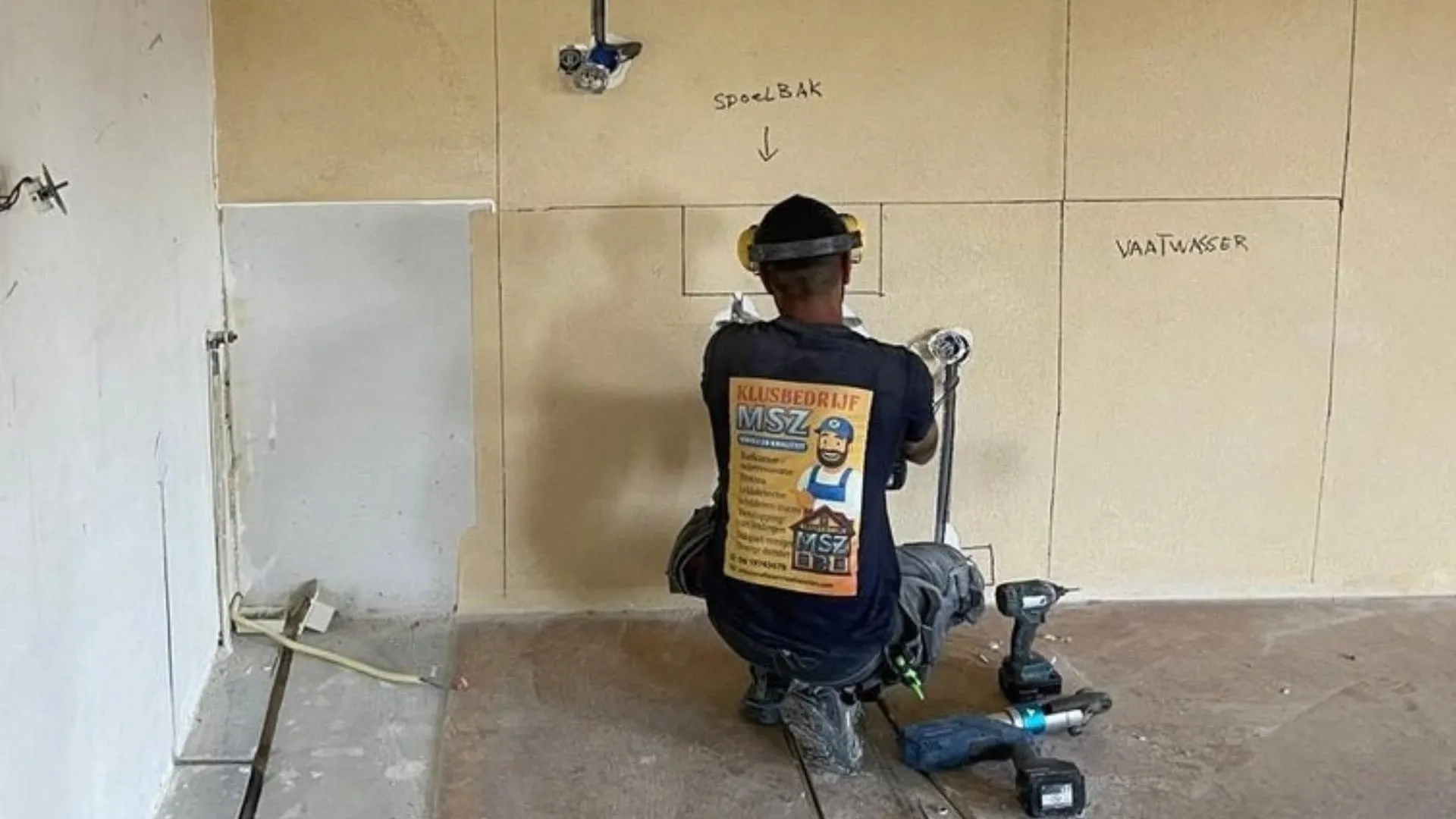
Replacing water pipes in a house in Almere is rarely needed because of their age or material: the town was built after 1976 and lead pipes have been banned since 1960. Replacing pays off mainly when the same stretch of pipe keeps leaking, when pipes are damaged, or when you are opening up a bathroom or kitchen anyway.
Below you can read which signs count, when a repair is enough, who is responsible for which part of the pipework and what it costs.
Short answer: in Almere you do not need to replace all your water pipes as a precaution. If one joint leaks, a repair is enough. If the same stretch of pipe leaks for a second time, if a pipe is kinked, frozen or corroded, or if the wall is coming open for a renovation anyway, you replace only that part. A completely new installation is the exception here.
When do water pipes need replacing?
A water pipe needs replacing when it is no longer safe or reliable: lead pipes, a pipe that keeps leaking along the same stretch, or a pipe damaged by frost, a drill or subsidence. Age alone is not a reason. A pipe that is dry and watertight can stay where it is.
In practice we come across three situations:
- The leak comes back. One leaking joint is a repair. If the same pipe leaks again a few months later in a different spot, it makes more sense to replace that whole stretch than to fit a new joint each time.
- The pipe is damaged. A pipe that was drilled through when a cupboard was hung, that burst in the frost or that is trapped by subsidence is replaced from the first sound section to the next.
- The wall or floor is coming open anyway. A new bathroom or kitchen is the moment to replace old pipes behind the tiles as well. Afterwards they are hidden away again for years.
Our page on leaks and pipework says the same: often only the affected section needs replacing and the whole installation does not have to come out.
Does my house in Almere have lead pipes?
Almost certainly not. The Dutch government writes that lead pipes have been banned since 1960 and can only still be in use in homes built before 1960. The first home in Almere was moved into in 1976, in Almere Haven, reports Hart van Nederland.
That makes the answer in Almere different from Amsterdam or the old village centres of the Gooi. There are still many houses from before 1960 there, and checking for lead does make sense. Milieu Centraal, the Dutch environmental information centre, puts it simply: if your house was built after 1960, you do not need to worry. According to Milieu Centraal, you recognise lead pipes by their grey colour, a slightly irregular shape and thickened sections instead of fittings, and they sound duller when you tap them.
If you do see a grey pipe in the meter cupboard in Almere, given the age of the house it is almost certainly not lead. If you are unsure, send a photo via WhatsApp. We can often tell straight away what it is.
Which signs point to a bad water pipe?
The clearest signs are a water meter that keeps running while all taps are off, damp patches that return in the same place, and green or white deposits around joints. A single tap that suddenly gives much less water than the rest can also point to a problem in that stretch of pipe.
Go through this list:
- The water meter keeps running. Turn off all taps and check whether the meter stands still. How to test this is explained in water meter running with no water in use.
- A recurring damp patch in a wall, ceiling or under a floor.
- Deposits or drips at joints under the kitchen worktop, behind the toilet or in the meter cupboard.
- One tap with low pressure while the other taps run normally.
- A pipe that is kinked, trapped or rubbing against a joist, often visible in the crawl space.
- Knocking or banging when you turn a tap off quickly.
One sign does not mean the pipe has to come out. It means someone needs to find out where it comes from. For a leak you cannot see, we first use leak detection to find where it is, so that only that spot needs opening up.
Why can the ground in Almere affect your pipes?
Almere stands on a polder with soft ground that slowly sinks. As a result, pipes that come into the house from outside or run through the crawl space can come under strain.
We see this most often with sewer pipes; our article on a sunken sewer in Almere covers that. With water pipes you notice it less quickly, because they are under pressure and a small kink does not leak right away. If you do look in the crawl space, watch for pipes that are pulled tight or that press against the foundation somewhere.
Frost plays a part too. A pipe in a cold crawl space, a garage or running to an outdoor tap can freeze and split. A split pipe like that is replaced as a whole, not just the visible leak. Prevention is simpler: read how to get your outdoor tap ready for winter.
Who is responsible for the water pipe: you or the water company?
You are responsible for everything from the water meter into the house; the drinking water company for the pipe from the water meter to the street. That is how the Dutch government puts it for lead pipes, and in practice the same line applies to any leak.
If the leak is before the water meter, so between the street and the meter, call the drinking water company. If it is after the meter, it is your pipe and you call a plumber.
Renting? Then contact your landlord. According to the Dutch government, the landlord is responsible for replacing lead pipes, and you can report it to the Huurcommissie (the rent tribunal) as a serious defect if that does not happen. The same principle applies to other pipes that need replacing: replacement is the owner’s job. If you live in a flat, a shared pipe may fall under the owners’ association (VvE). Check the splitsingsreglement (the deed of division) first.
Do you have district heating, like many houses in Almere? Then your hot water comes from the heat interface unit and not from a boiler. The pipes from the heat interface unit to your taps are part of your own installation. How that line works with Vattenfall is explained in radiator not warm with district heating in Almere.
Do it yourself or call the plumber?
A dripping tap or a loose joint under the sink you can often tighten yourself. Replacing a pipe in a wall, floor or crawl space is a job for a professional: the water has to be off, pipe has to be cut, laid and pressure-tested, and a mistake sometimes only leaks weeks later, behind the tiles.
A simple rule:
| Situation | Do it yourself? | What to do |
|---|---|---|
| Joint under the sink or basin drips | Yes | Main stopcock off, tighten the nut by hand, wipe dry and check |
| Tap or flexible hose leaks | Often | Replace the hose or tap; send a photo if in doubt |
| Water meter keeps running, leak not visible | No | Leak detection, then open up only where needed |
| Leak in a wall, floor or ceiling | No | Main stopcock off, call a plumber |
| Pipe burst by frost | No | Main stopcock off, electricity off if water is near sockets, call straight away |
| Replacing pipes during a renovation | No | Include it in the planning of the bathroom or kitchen |
Is there water near sockets, the consumer unit (fuse box) or electrical appliances? Do not touch anything, switch off the electricity if you can reach it safely, and call.
Is it smart to replace water pipes during a bathroom or kitchen renovation?
Yes, if the old pipes are behind the wall you are closing up. Once the tiles come off, the pipes are exposed and replacing them is little extra work. Once the new bathroom is closed up, a leak in an old pipe later means tiles have to come out.
With every bathroom and toilet renovation we look at the pipes that are already there. If they are sound and in the right place, they stay. If the taps, toilet or shower need to move, the pipes are rerouted and replacing them is often the logical step. With a full renovation we include all the pipework in the planning, along with the drains and, if you have them, the heating pipes.
You can read more about the order of a renovation in our step-by-step plan for a bathroom renovation.
What does replacing a water pipe cost?
According to price comparison sites, replacing a short stretch of water pipe costs a few hundred euros; a longer pipe, or one that has to be neatly hidden under the floor or in the wall, costs more. At Klusbedrijf MSZ you pay by the hour, with a minimum of one hour per visit.
Guide prices, November 2026
| Work | Price incl. VAT (excl. VAT) | Source |
|---|---|---|
| First hour on site, also the minimum per visit (Klusbedrijf MSZ) | €181.44 (€149.95) | MSZ rate |
| Each further hour (Klusbedrijf MSZ) | €108.84 (€89.95) | MSZ rate |
| Call-out charge in Almere (Klusbedrijf MSZ) | €0 | MSZ rate |
| Call-out charge elsewhere in the service area (Klusbedrijf MSZ) | €42.35 (€35) | MSZ rate |
| Replacing a water pipe, market price | €100–€600 (approx. €83–€496) | Slimster, incl. VAT and materials |
| Water pipe up to 1.5 metres, market price | €300–€400 | Werkspot, updated 21 August 2026 |
| Longer water pipe, market price | €600–€750 | Werkspot, updated 21 August 2026 |
| Hiding the pipe under the floor, extra | €100–€300 | Werkspot, updated 21 August 2026 |
Werkspot, the Dutch review platform, does not give separate amounts excl. VAT. Materials and closing up walls or floors come on top of our hourly rate. With the calculator on our prices page you can see what a job of a few hours costs. If you send photos, we give a free estimate at a distance; a site visit for a quote is not free.
Frequently asked questions
What does a plumber cost for replacing a water pipe in Almere?
At Klusbedrijf MSZ the first hour on site costs €181.44 incl. VAT (€149.95 excl. VAT), with no call-out charge in Almere. Each further hour costs €108.84 incl. VAT (€89.95 excl. VAT), plus materials. A price indication at a distance, based on photos, is free.
Do I need to check for lead pipes in Almere?
No, in almost every case not. Lead pipes have been banned since 1960 and Almere was only lived in from 1976. If you live in an older house in Amsterdam or the Gooi, checking does make sense.
How long does a water pipe last?
There is no fixed period. A pipe that is dry and watertight can stay; age alone is no reason to replace it. Watch for recurring leaks, deposits at joints and a water meter that keeps running.
Do I have to replace all pipes if there is one leak?
No. One leak is usually a repair of that joint or that stretch of pipe. Only when the same stretch leaks again, or when the wall is coming open for a renovation anyway, is replacing that part sensible.
Who pays for a leaking pipe before the water meter?
The pipe from the street to the water meter belongs to the drinking water company. If it leaks there, call the drinking water company. Everything from the water meter into the house belongs to the owner of the house.
Can I have pipes replaced in a rented home?
Replacing pipes is the landlord’s job. Report the problem to your landlord in writing. If nothing happens with lead pipes, according to the Dutch government you can take it to the Huurcommissie (the rent tribunal) as a serious defect.
Need your water pipes replaced? Call Klusbedrijf MSZ
Not sure whether your pipe needs repairing or replacing? We first find out where the problem is and replace only what is needed. We replace water pipes as a separate job or as part of a renovation, with a 1-year guarantee on the work and 4 to 5 years on the installed products.
Klusbedrijf MSZ is a family business from Almere, available 24/7, including nights, weekends and public holidays, and rated 5.0 on Werkspot from 225+ reviews. If your water pipes need replacing, we help in Almere, Lelystad, Amsterdam and the Gooi. Call 06 19 74 36 78, send a photo of the pipe via WhatsApp for a first estimate, or request a free quote.
